
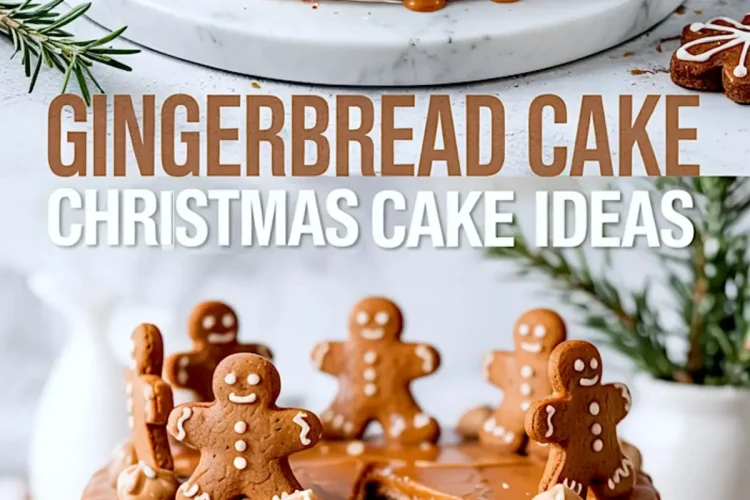
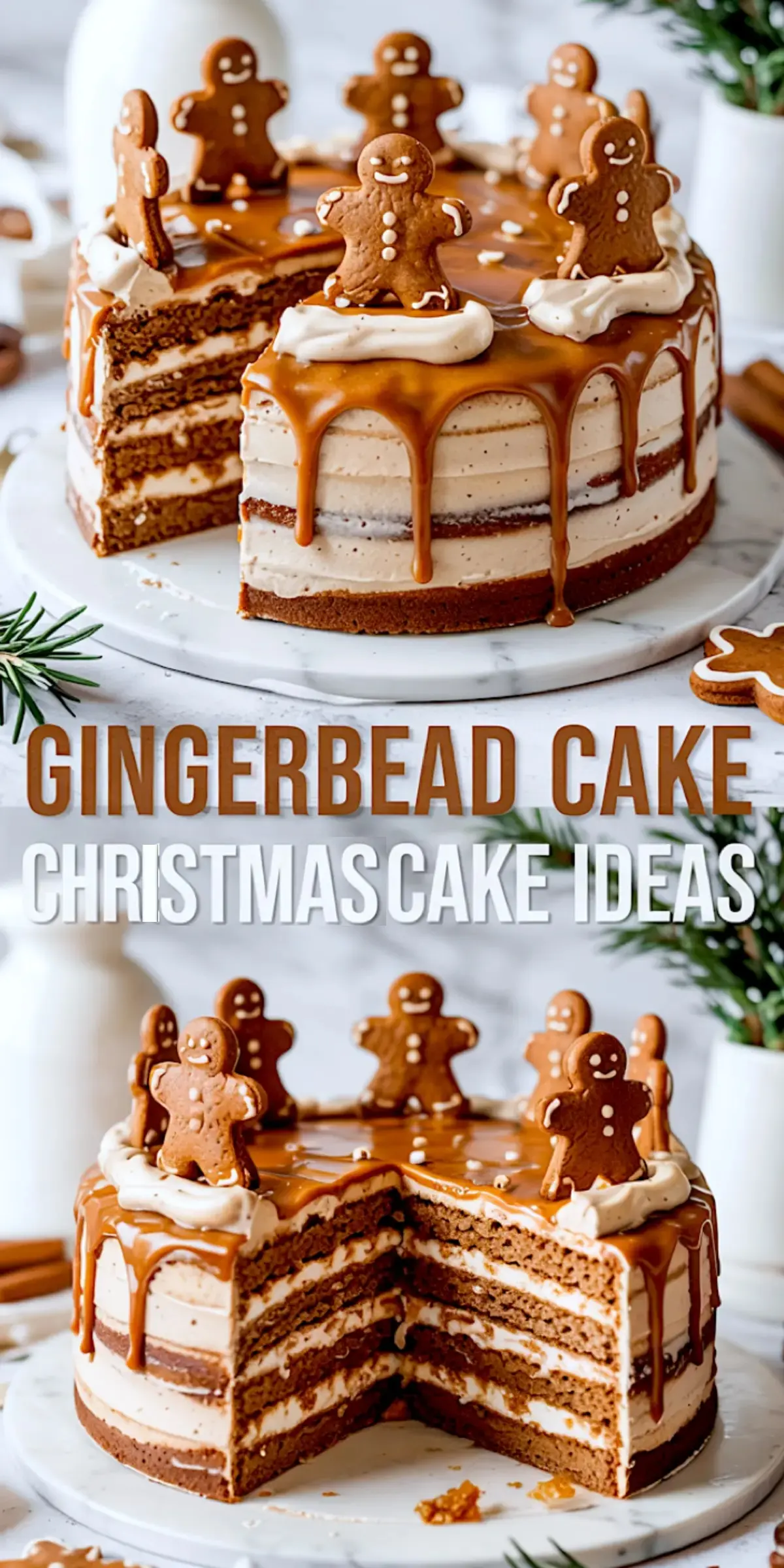
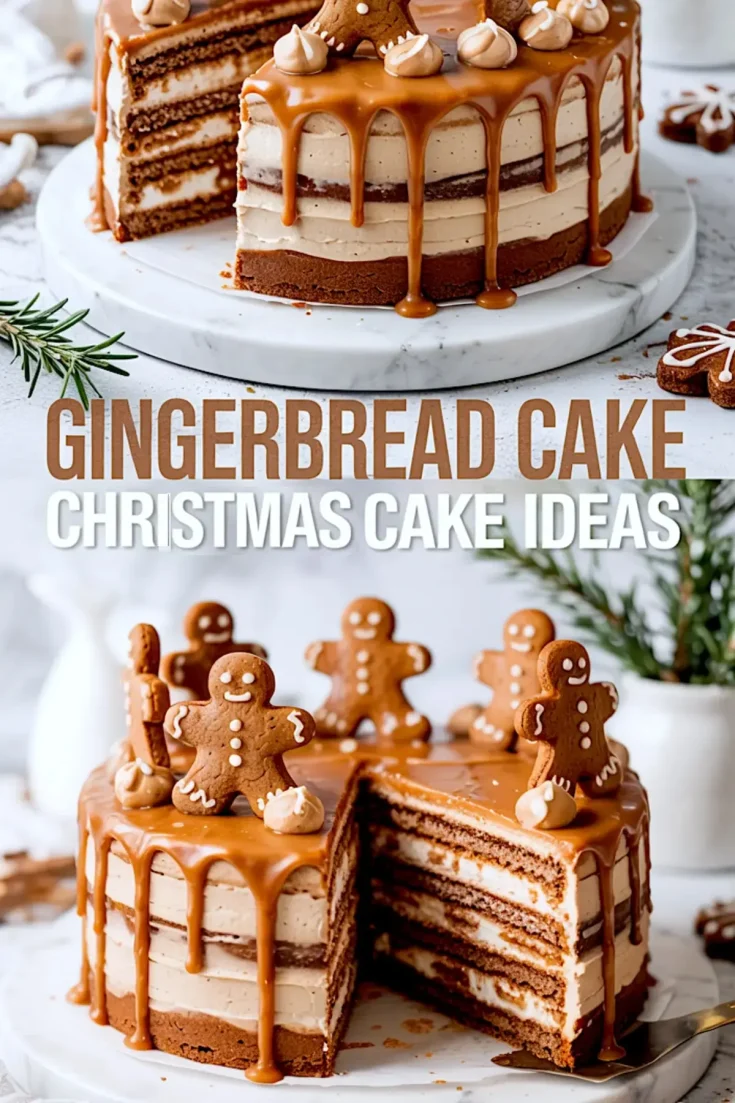
This Christmas gingerbread cake is four 6 inch layers of soft molasses and ginger cake, filled with brown sugar buttercream, finished with a caramel drip and a ring of mini gingerbread cookies. The layers bake in 20 to 24 minutes at 350°F, and the whole cake cuts into 10 to 12 tall slices.
Most of the work is waiting: for the layers to cool, for the crumb coat to set, for the caramel to thicken. Split it over two days and it is a calm bake. The one thing not to rush is the caramel. Poured warm, it melts straight through the buttercream.
Pans, Oven and Timing
- Pans: four 6 inch round pans, greased, lined with parchment and lightly floured
- Oven: 350°F (175°C), about 400 g of batter per pan
- Bake: 20 to 24 minutes, then 10 minutes in the pans before turning out
- Buttercream: about ¾ cup between each layer, plus a thin crumb coat and a second thin coat
- Chill stops: 20 minutes after the crumb coat, 15 minutes after the cookies go on
- Serves: 10 to 12 slices
Mixing the Molasses Batter
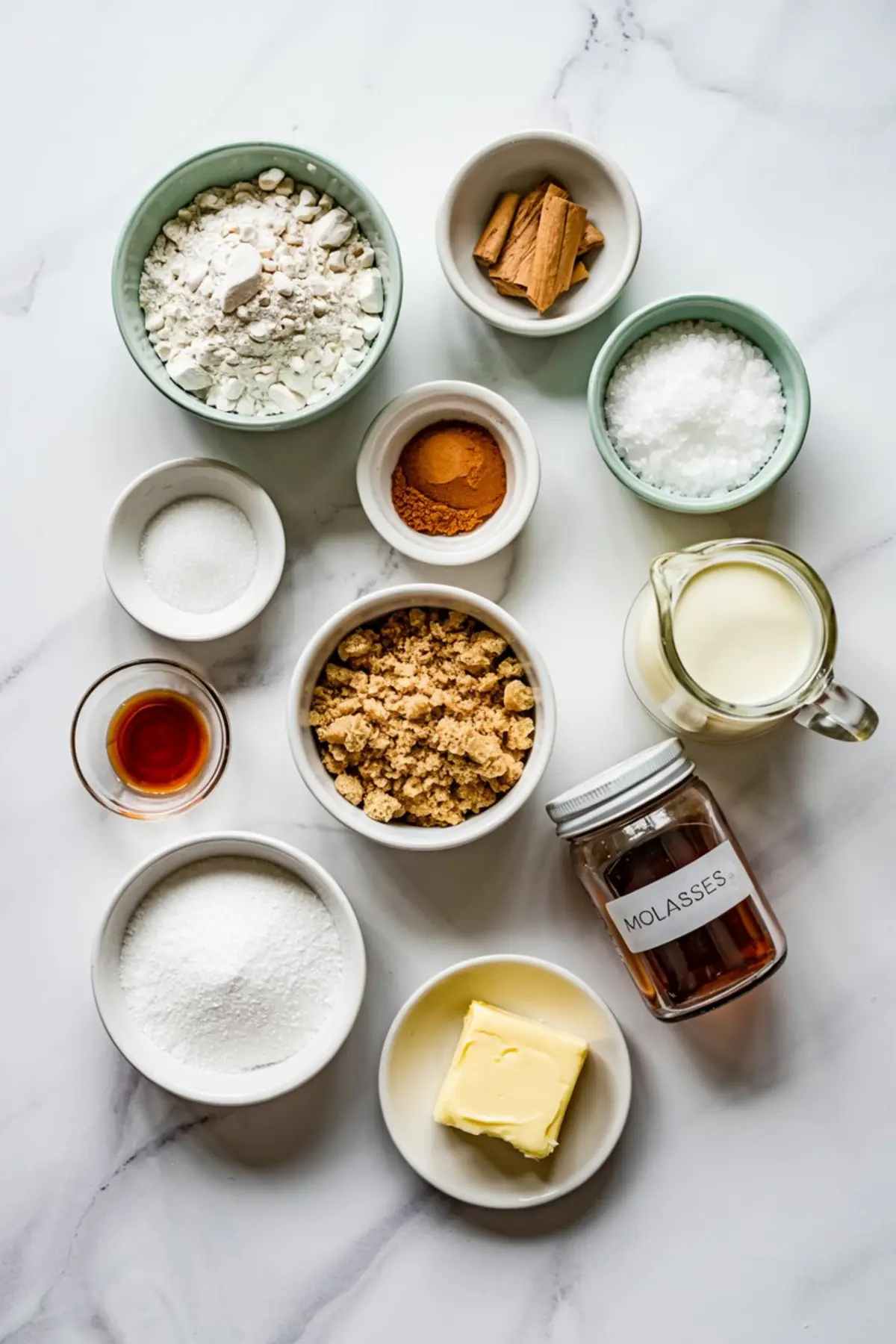
The spice is led by ground ginger (2⅔ teaspoons) and cinnamon (2 teaspoons), with cloves and nutmeg kept to ⅔ teaspoon each so they warm the cake without turning it bitter. Whisk them with the flour, baking soda, baking powder and salt first, so no pocket of soda or cloves ends up in one slice.
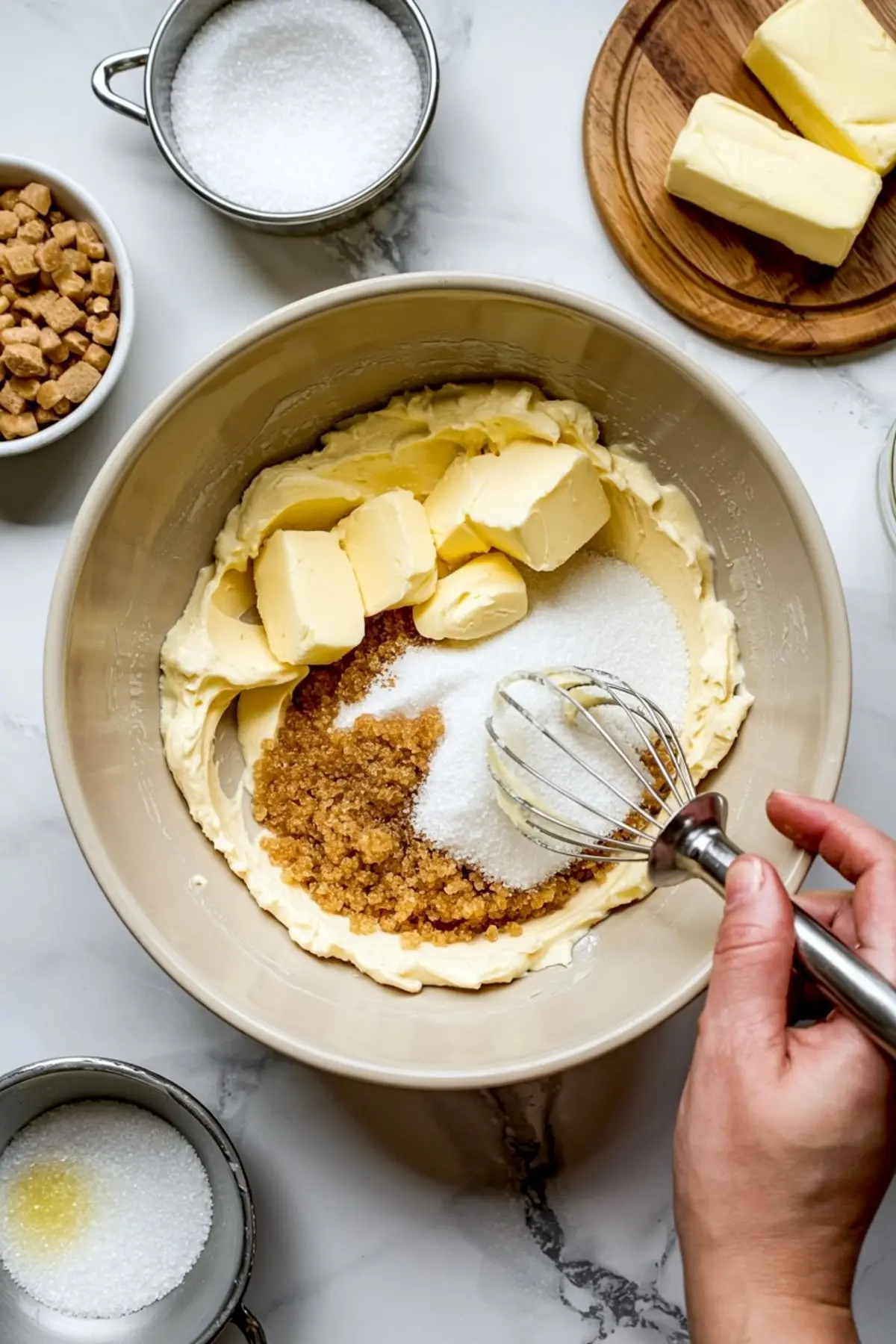
Beat the soft butter with the light brown sugar and granulated sugar for a full 3 minutes, until the mixture is pale and fluffy. Add the eggs one at a time and scrape the bowl after each, then the vanilla and the molasses. The batter should look smooth and glossy, not curdled. Room temperature eggs and buttermilk help a lot here; cold ones make the butter seize into little lumps.
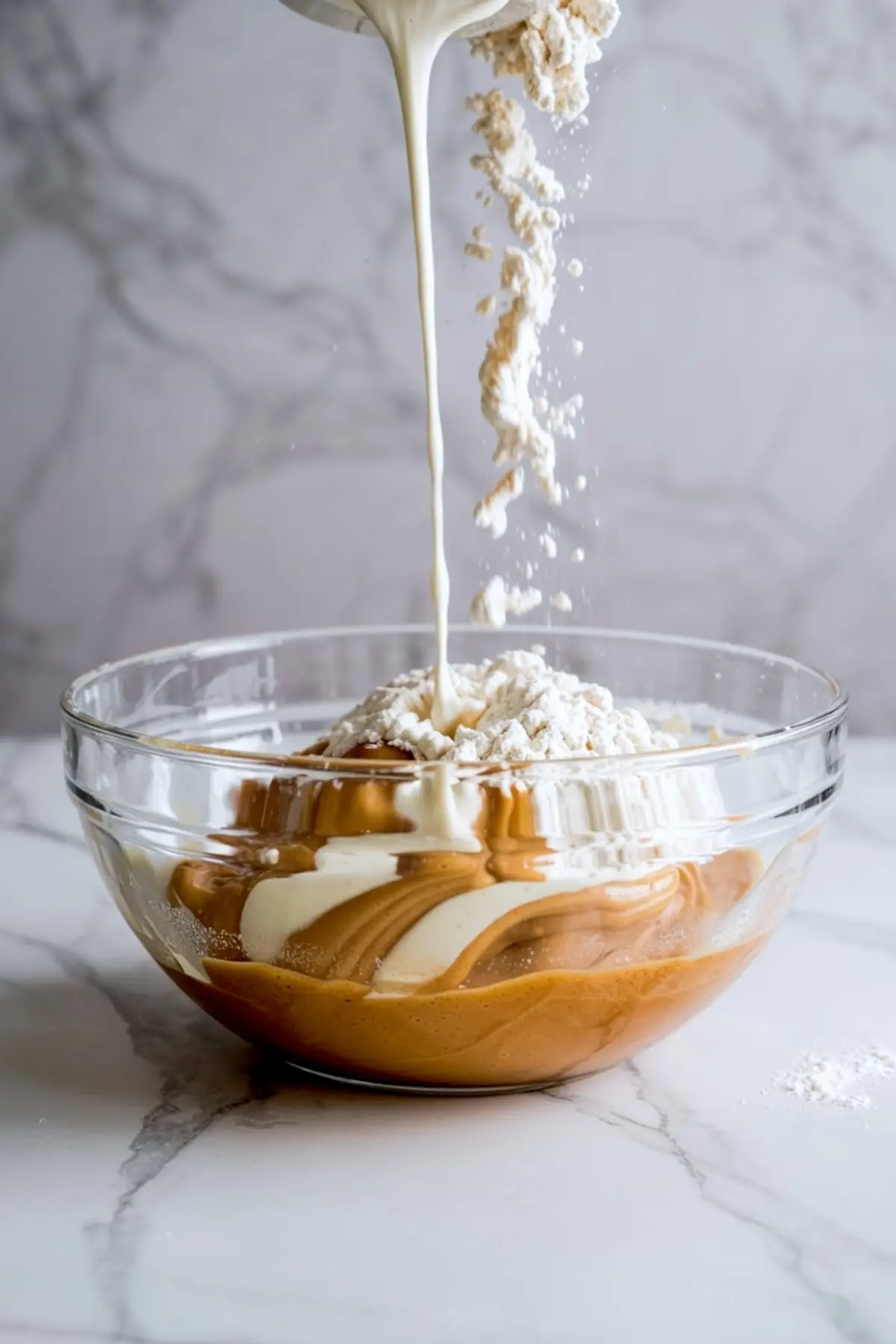
On low speed, add the dry mix in three parts and the buttermilk in two, starting and ending with the dry. Stop as soon as the last streak of flour disappears. Use unsulphured molasses. Blackstrap is much darker and bitter, and it takes over the cake. No buttermilk? Stir 4 teaspoons of lemon juice into 1⅓ cups of milk and let it sit for 5 minutes.
Baking Four 6 Inch Layers
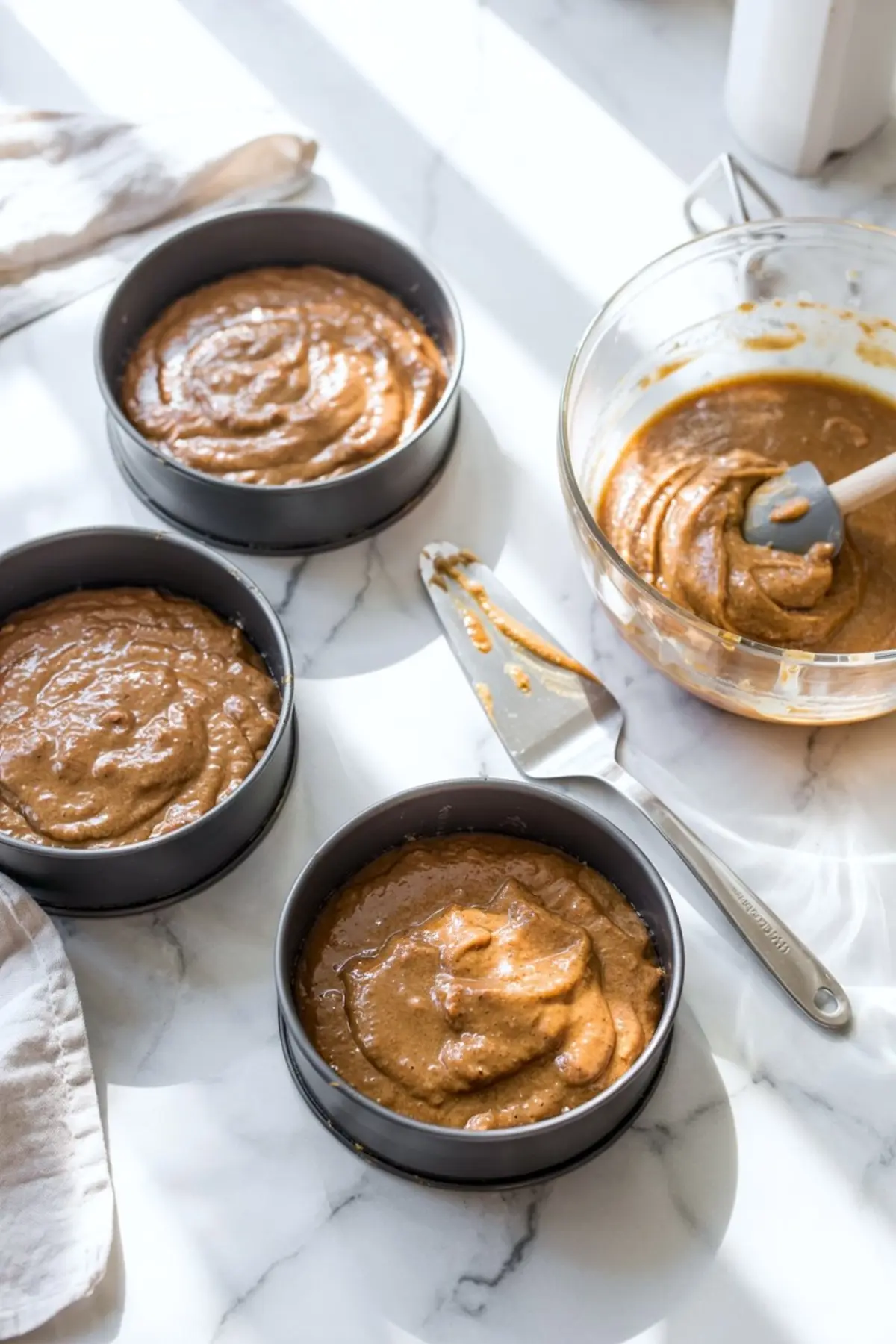
A kitchen scale is the easiest way to get four even layers: about 400 g of batter per pan. Level the tops and bake for 20 to 24 minutes. Molasses batter browns early, so the color tells you very little. Go by a toothpick that comes out clean, a top that springs back when pressed, and edges that just start to pull away from the pan.
Cool the layers in the pans for 10 minutes, then turn them out onto a rack and let them cool completely. Even slightly warm cake will melt the buttercream later.
Brown Sugar Buttercream Without the Grit
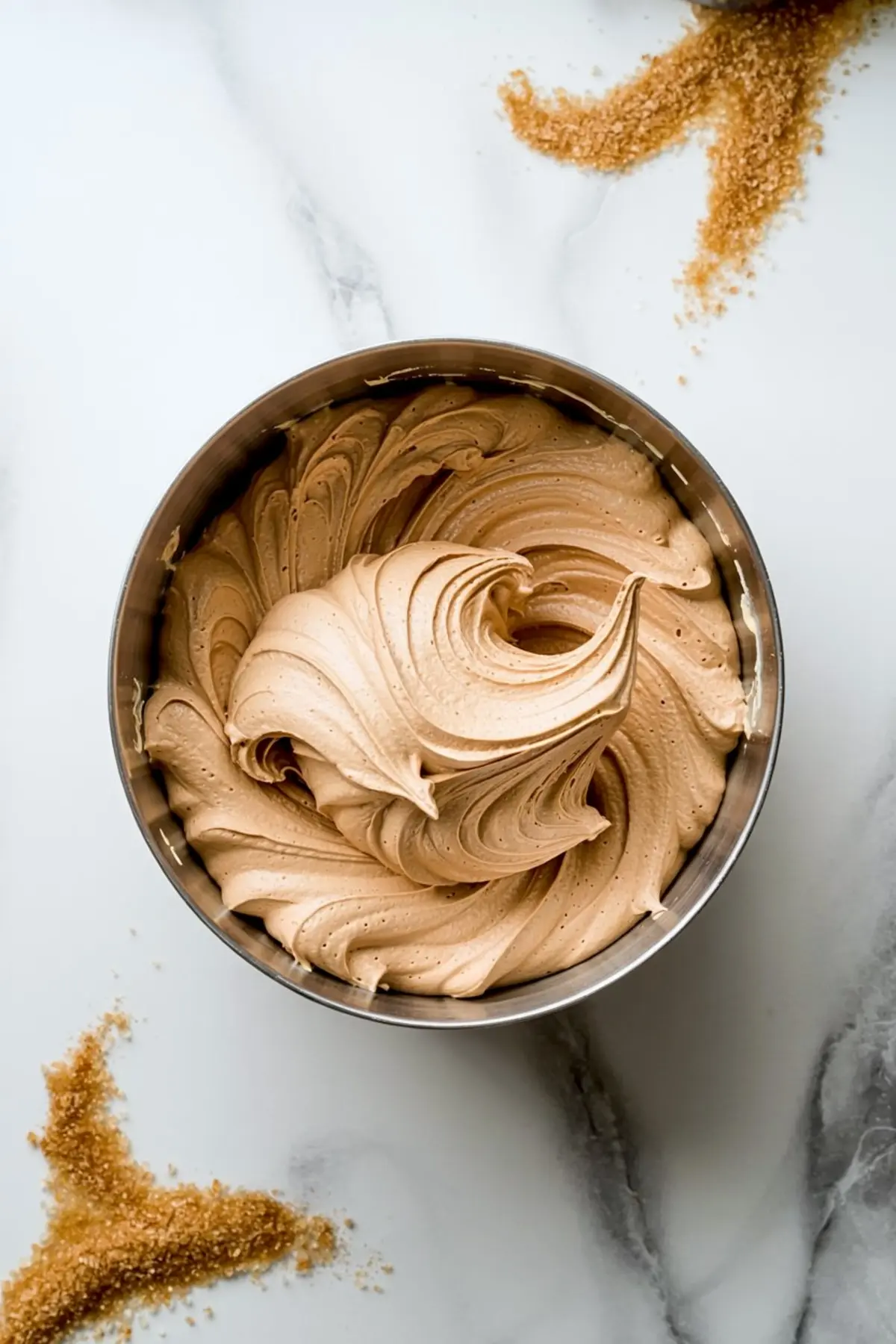
This buttercream starts with 1⅓ cups of butter and ⅔ cup of light brown sugar beaten together for 4 minutes before anything else goes in. That long beat is what dissolves most of the brown sugar crystals; skip it and the frosting feels sandy. A few tiny granules are normal and give it a toffee taste.
Then add the sifted powdered sugar on low, the vanilla, a pinch of salt and 3 tablespoons of heavy cream, and whip on high for 3 to 4 minutes. Add the fourth tablespoon of cream only if it is too stiff to spread. I have tried dark brown sugar in the same amount and it made the frosting slightly too wet and heavy, so I stay with light brown. For a cooked, caramel-like topping on a simpler cake, my separate brown sugar frosting is a different recipe worth knowing.
A Caramel Drip That Stops Where You Want It
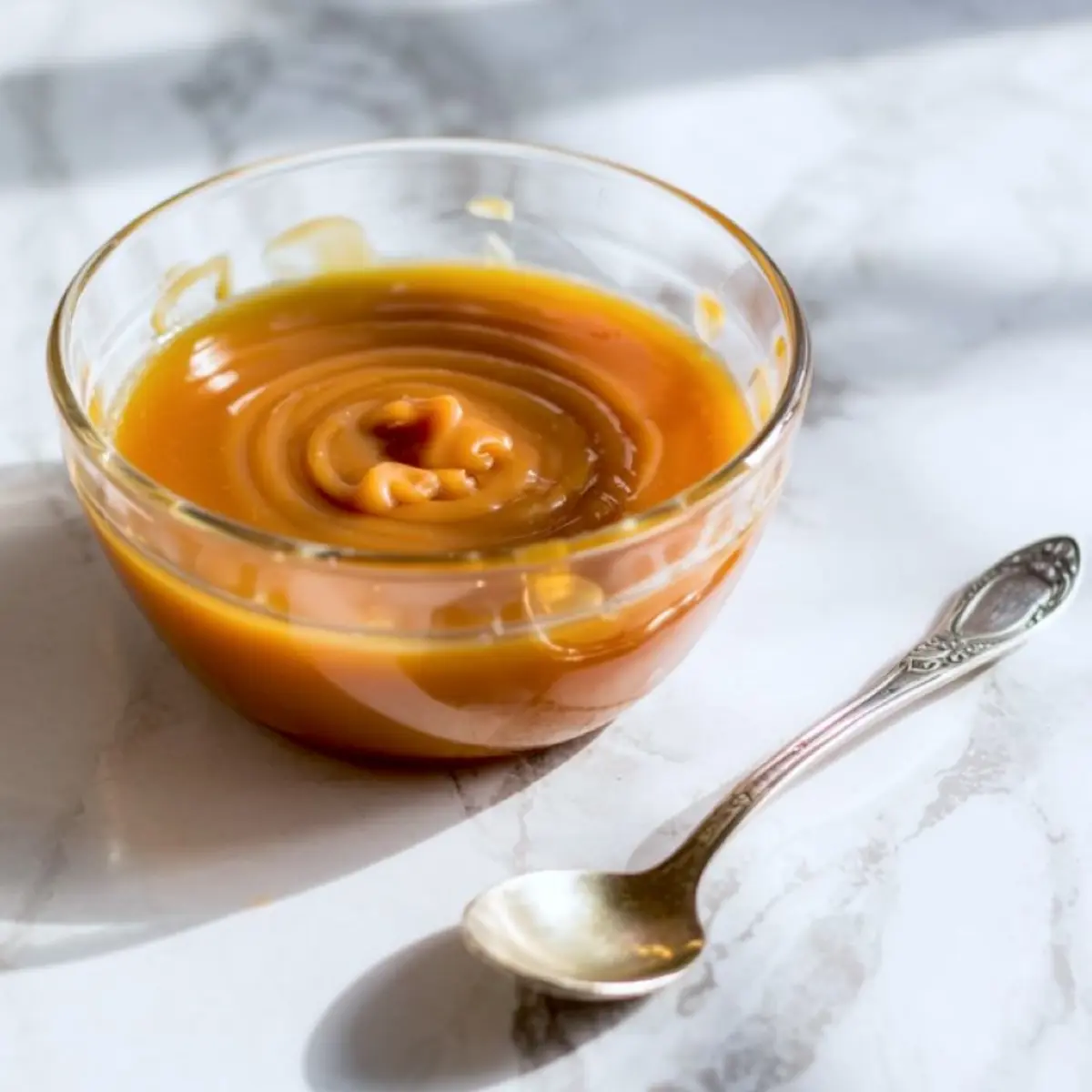
Melt the ⅔ cup of granulated sugar in a heavy saucepan over medium heat, stirring as it liquefies. Watch the color, not the clock: take it to a deep amber, about the color of a copper coin, with a toasty smell. If it smokes or smells sharp, it has gone too far and will taste bitter.
Whisk in the butter pieces, then take the pan off the heat and stream in the room temperature cream while stirring. It will bubble hard. Put it back on low heat for 30 seconds, then stir in the salt and vanilla.
Now leave it alone. The caramel is ready when it falls from a spoon in a slow, thick ribbon, which on my counter takes about 20 minutes. Test one drip on the side of the cake first.
- Drip runs to the board: the caramel is still too warm or the cake is soft. Wait 5 minutes and chill the cake briefly.
- Drip stops after a centimeter and looks lumpy: the caramel has cooled too far. Warm it for 10 seconds and stir.
- Hard lumps when the cream went in: the cream was cold. Keep stirring over low heat until they melt.
Stacking, Dripping and Standing the Cookies Up
Level the tops with a long serrated knife if they domed. Put the first layer on the board and spread about ¾ cup of buttercream right to the edge, then repeat, finishing with the fourth layer on top. More than that and the filling squeezes out under the weight of the next layer.
Spread a thin crumb coat over the top and sides and scrape it back for a semi-naked look, then chill for 20 minutes. Add a second thin coat if needed. Drip the cooled caramel around the top edge with a spoon or squeeze bottle, then fill the center and spread it just to meet the drips.
Pipe small dots of buttercream where the cookies will stand and press mini gingerbread people upright around the edge. Store-bought cookies work, or bake a tray of my gingerbread man cookies with a small cutter and add faces with royal icing. Chill for 15 minutes before slicing so the cookies and drip set.
Gingerbread Cake vs Spice Cake, and a 9×13 Version
Both use warm spices, but gingerbread is built on molasses and ginger: darker, stickier and more bittersweet. A spice cake usually leans on cinnamon and nutmeg with brown sugar, and tastes lighter. If that is what you are after, my carrot spice cake is the closer match.
For an easy gingerbread cake without stacking, bake the same batter in a greased and lined 9×13 pan and start checking at 30 minutes. It needs only half the buttercream on top; the caramel and cookies are optional. A gingerbread loaf is the even simpler option for a weekday, and gingerbread man cupcakes use a similar spiced base in single portions.
Two-Day Plan and Storage
On day one, bake the layers, cool them completely, and wrap each one tightly. They keep at room temperature overnight. The buttercream and caramel can be made the same day and kept covered in separate containers; bring both back to room temperature and give the buttercream a quick whip before using. On day two, stack, crumb coat, drip and decorate.
The assembled cake keeps in the fridge for 2 to 3 days. Press parchment against the cut sides to keep them moist. Take it out 30 to 45 minutes before slicing so the buttercream softens and the knife goes through cleanly. The cookies soften a little by the second day but stay upright. Unfrosted layers also freeze well wrapped in plastic and foil for up to a month; thaw them in the wrapping.
Pin it to your Christmas cake board, and if the cookie tray needs a partner, gingerbread crinkle cookies use the same spice cupboard.
Gingerbread Cake Recipe
Made it? Tap the stars to rate it.
This Christmas gingerbread cake is a four layer molasses spice cake made with ground ginger, cinnamon, brown sugar, unsulphured molasses and buttermilk, filled with brown sugar buttercream and finished with a caramel drip and mini gingerbread cookies. The four 6 inch layers bake in 20 to 24 minutes at 350°F and the cake gives 10 to 12 tall, soft slices. The caramel is cooled until thick but pourable before it goes on, so the drip stops on the side instead of melting the frosting. Make it as a Christmas centerpiece cake, a gingerbread birthday cake in December, or bake the batter in a 9x13 pan for an easy gingerbread sheet cake. Bake the layers a day ahead; the finished cake keeps 2 to 3 days chilled.
Ingredients
- FOR THE GINGERBREAD CAKE
- 3 ⅓ cups all-purpose flour
- 2 ⅔ teaspoons ground ginger
- 2 teaspoons ground cinnamon
- ⅔ teaspoon ground cloves
- ⅔ teaspoon ground nutmeg
- ⅔ teaspoon baking soda
- 2 ⅔ teaspoons baking powder
- ⅔ teaspoon fine salt
- 1 cup unsalted butter, softened
- 1 cup packed light brown sugar
- ⅔ cup granulated sugar
- 3 large eggs, room temperature
- 1 ⅓ teaspoons vanilla extract
- 7⁄8 cup (14 tablespoons) unsulphured molasses
- 1 ⅓ cups buttermilk, room temperature
- FOR THE BROWN SUGAR BUTTERCREAM
- 1 ⅓ cups unsalted butter, room temperature
- ⅔ cup packed light brown sugar
- 4 ⅔ cups powdered sugar, sifted
- 3–4 tablespoons heavy cream, as needed
- 1 ⅓ teaspoons vanilla extract
- Pinch of fine salt
- FOR THE CARAMEL DRIP
- ⅔ cup granulated sugar
- 4 tablespoons unsalted butter, cut into pieces
- ⅓ cup heavy cream, room temperature
- Pinch of fine salt
- ⅔ teaspoon vanilla extract
- FOR THE GINGERBREAD COOKIE TOPPERS
- Mini gingerbread people cookies (store-bought or homemade)
- Royal icing for detailing, optional
Instructions
- PREPARE CAKE PANS AND OVEN: Heat oven to 350 °F (175 °C). Grease four 6-inch round cake pans, line bases with parchment, and lightly flour the sides.
- COMBINE DRY INGREDIENTS: Whisk flour, baking soda, baking powder, salt, ginger, cinnamon, cloves, and nutmeg in a medium bowl; set aside.
- CREAM BUTTER AND SUGARS: Beat softened butter, brown sugar, and granulated sugar in a stand mixer fitted with the paddle on medium speed for 3 minutes until pale and fluffy.
- ADD EGGS, VANILLA, AND MOLASSES: Mix in eggs one at a time, scraping bowl after each. Blend in vanilla, then molasses, until the batter looks smooth and homogenous.
- ALTERNATE DRY MIX AND BUTTERMILK: On low speed, add one-third of the dry mix, half of the buttermilk, another third of dry, remaining buttermilk, then final dry portion, stopping when just combined.
- DIVIDE AND BAKE: Portion batter evenly among the four pans (about 400 g per pan). Level tops and bake 20–24 minutes, or until a toothpick tests clean. Cool in pans 10 minutes, then turn out onto racks to cool completely.
- MAKE BUTTERCREAM BASE: Beat butter and brown sugar on medium speed for 4 minutes until light and glossy, dissolving most sugar granules.
- FINISH BUTTERCREAM: Gradually mix in powdered sugar on low. Add vanilla, salt, and 3 tablespoons cream, then whip on high for 3–4 minutes. Add an extra tablespoon of cream if a softer texture is needed.
- COOK CARAMEL: Melt sugar in a heavy saucepan over medium heat, stirring until it liquefies and reaches a deep amber color. Carefully whisk in butter until incorporated.
- FINISH CARAMEL: Off heat, stream in cream while stirring (it will bubble vigorously). Return to low heat for 30 seconds, then remove, stir in salt and vanilla, and cool until thick but pourable.
- ASSEMBLE LAYERS: Level cake tops if necessary. Place first layer on a serving board, spread about ¾ cup buttercream evenly to the edge, and repeat with remaining layers, ending with cake fourth layer on top.
- CRUMB COAT AND CHILL: Apply a thin buttercream layer around sides and top, scrape for a semi-naked finish, and refrigerate 20 minutes to set.
- DECORATE WITH FINAL COAT AND DRIP: Smooth a second thin coat of buttercream as needed. Using a spoon or squeeze bottle, drip cooled caramel along the top edge and fill the centre.
- ADD COOKIE TOPPERS: Pipe small buttercream dots where needed and stand mini gingerbread cookies upright around the top edge. Detail cookies with royal icing if desired. Chill 15 minutes before slicing.
Notes
For easier assembly, bake the cake layers a day ahead and store tightly wrapped at room temperature. Ensure the caramel cools fully before adding to prevent melting the buttercream; it is ready when it falls from a spoon in a slow, thick ribbon. Take the sugar off at a deep amber color; if it smokes, it will taste bitter. Use unsulphured molasses, not blackstrap. Beat the butter and brown sugar for the full 4 minutes so the buttercream is not gritty. Royal icing-decorated cookies add a festive touch, but plain cookies work just as well. Store the finished cake in the fridge for 2 to 3 days and let it stand 30 to 45 minutes before slicing.
Nutrition Information
Yield
12Serving Size
1Amount Per Serving Calories 876Total Fat 45gSaturated Fat 27gTrans Fat 0gUnsaturated Fat 15gCholesterol 153mgSodium 383mgCarbohydrates 116gFiber 1gSugar 91gProtein 6g

Made it? Tap the stars to rate it