
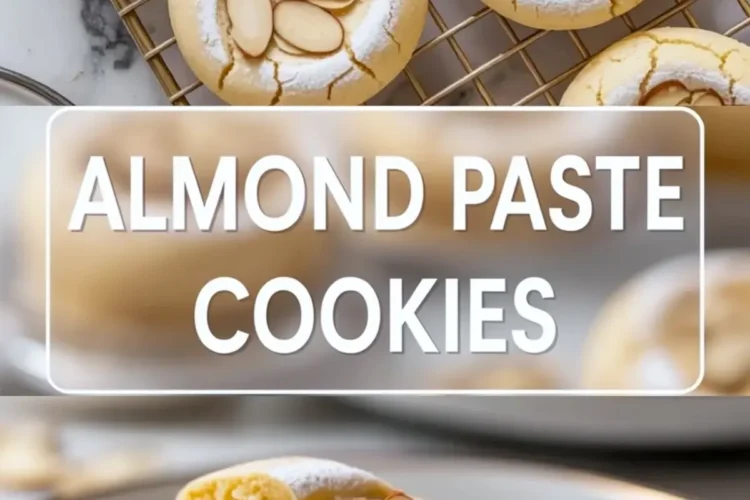
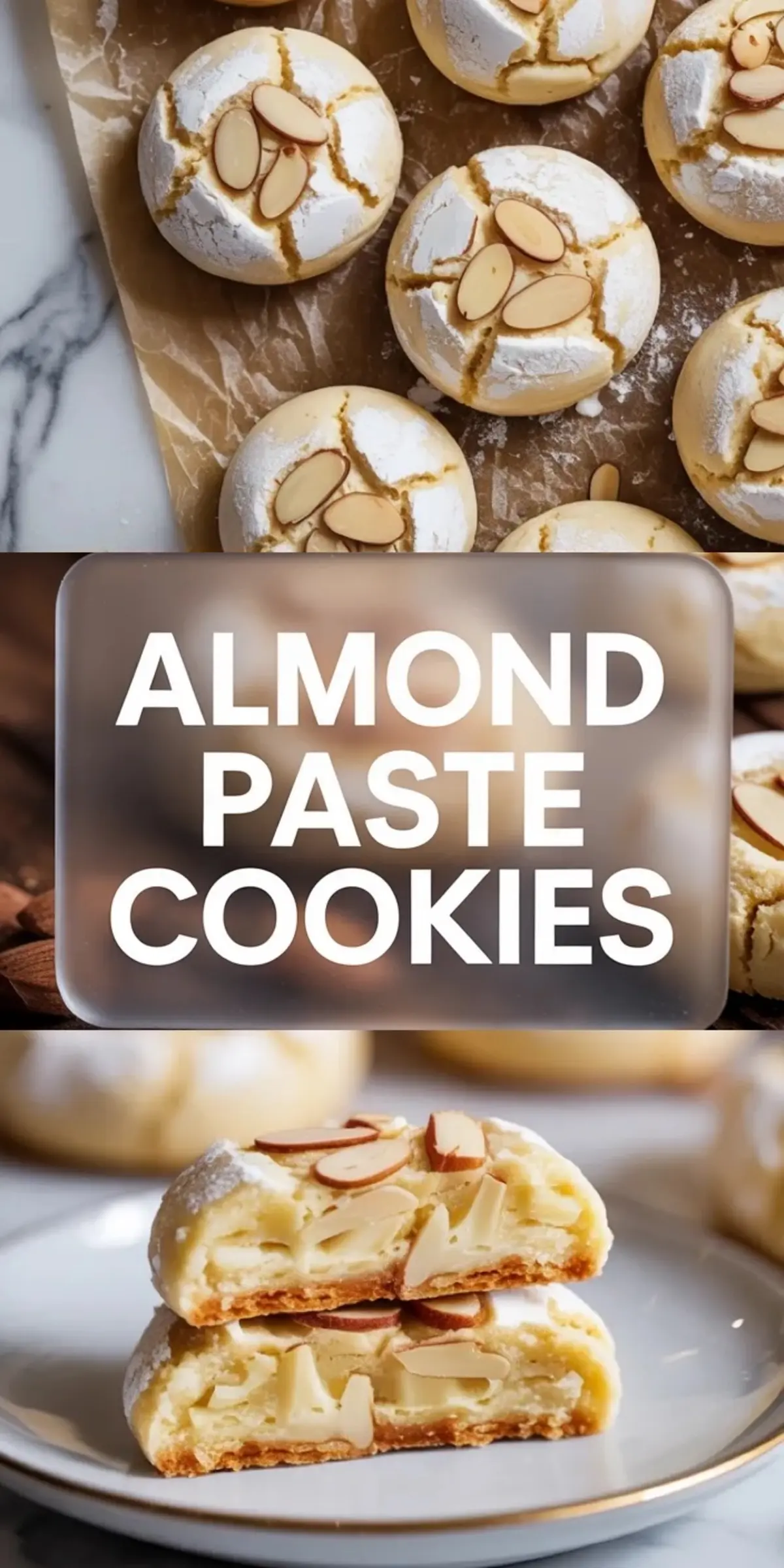
These almond paste cookies are chewy, crackle topped almond cookies made with 1 cup of crumbled almond paste, an egg white, a little butter and flour, and sliced almonds pressed on top. The dough chills for 20 minutes, bakes at 350°F (175°C) for 14 to 16 minutes, and makes 12 cookies in about 50 minutes.
The trick is taking them out early. The edges should be lightly golden while the centers still look soft. They firm up on the pan, and the middles stay dense and chewy, a lot like a bakery almond cookie.
Following a special diet?
Every recipe on this site can be converted to gluten-free, vegan, dairy-free, keto, nut-free or egg-free with adjusted ratios so nothing falls flat.
Try the Recipe Converter →Twelve Almond Paste Cookies: Times, Oven and Yield
- Yield: 12 cookies
- Time: 15 minutes prep, 20 minutes chilling, 14 to 16 minutes baking, about 50 minutes in all
- Oven: 350°F (175°C), one parchment lined baking sheet, cookies 2 inches apart
- Almond paste: 1 cup, crumbled, for 1 cup of all-purpose flour
- Egg: 1 large egg white only, no yolk
- Done when: edges lightly golden, centers still soft, then 5 minutes resting on the pan
- Keeps: up to 4 days in an airtight container
Almond Paste, Marzipan or Almond Flour?
They sit next to each other in the baking aisle, and they are not the same thing. Almond paste is ground almonds and sugar with a coarse, slightly crumbly texture. It is made for baking, and it is what gives these cookies their deep almond flavor and chewy middle.
Marzipan has more sugar and a smoother, softer texture, because it is meant for shaping candy and covering cakes. Swap it in here and the cookies taste sugary and spread flatter. Almond flour is only ground almonds, with no sugar and no moisture, so it cannot stand in for paste at all.
If all you have is almond extract and flour, bake my almond cookies instead.
Why This Dough Uses One Egg White and 4 Tablespoons of Butter
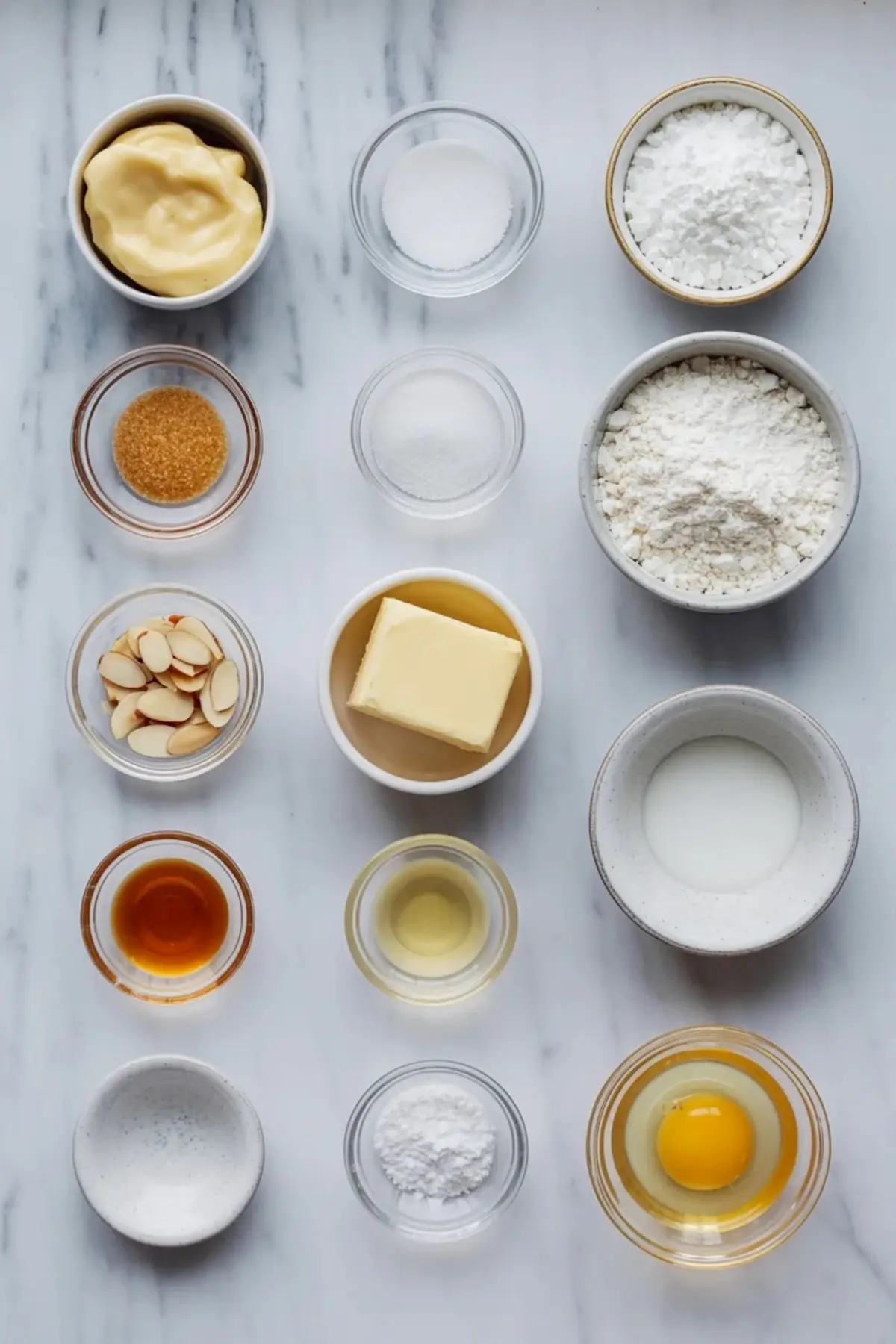
The egg white is what sets the dense, chewy center. It binds the almond paste the way it does in a macaroon, and without a yolk the crumb stays pale and the almond flavor stays clean. A whole egg makes the cookies softer and more cake-like.
Only 4 tablespoons of butter go in, and that is on purpose. Almond paste already brings oil from the nuts. More butter would make the dough greasy and the cookies spread into thin discs. The powdered sugar in the dough keeps the crumb fine, and the granulated sugar gives the tops their crackle.
One teaspoon of almond extract backs up the paste, and ½ teaspoon of vanilla rounds it out so the flavor tastes full rather than sharp.
Breaking Up Almond Paste So the Dough Is Smooth
Put the crumbled almond paste and the granulated sugar in a large bowl first. Beat them with a hand mixer or a sturdy spoon until the paste is in small pieces. The sugar crystals act like sandpaper and grind it down far better than butter alone would.
Fresh almond paste crumbles easily. If yours is hard or dry around the edges, grate it on the large holes of a box grater, or warm the block for about 10 seconds in the microwave so it softens. Stirring alone will never break up a stiff lump.
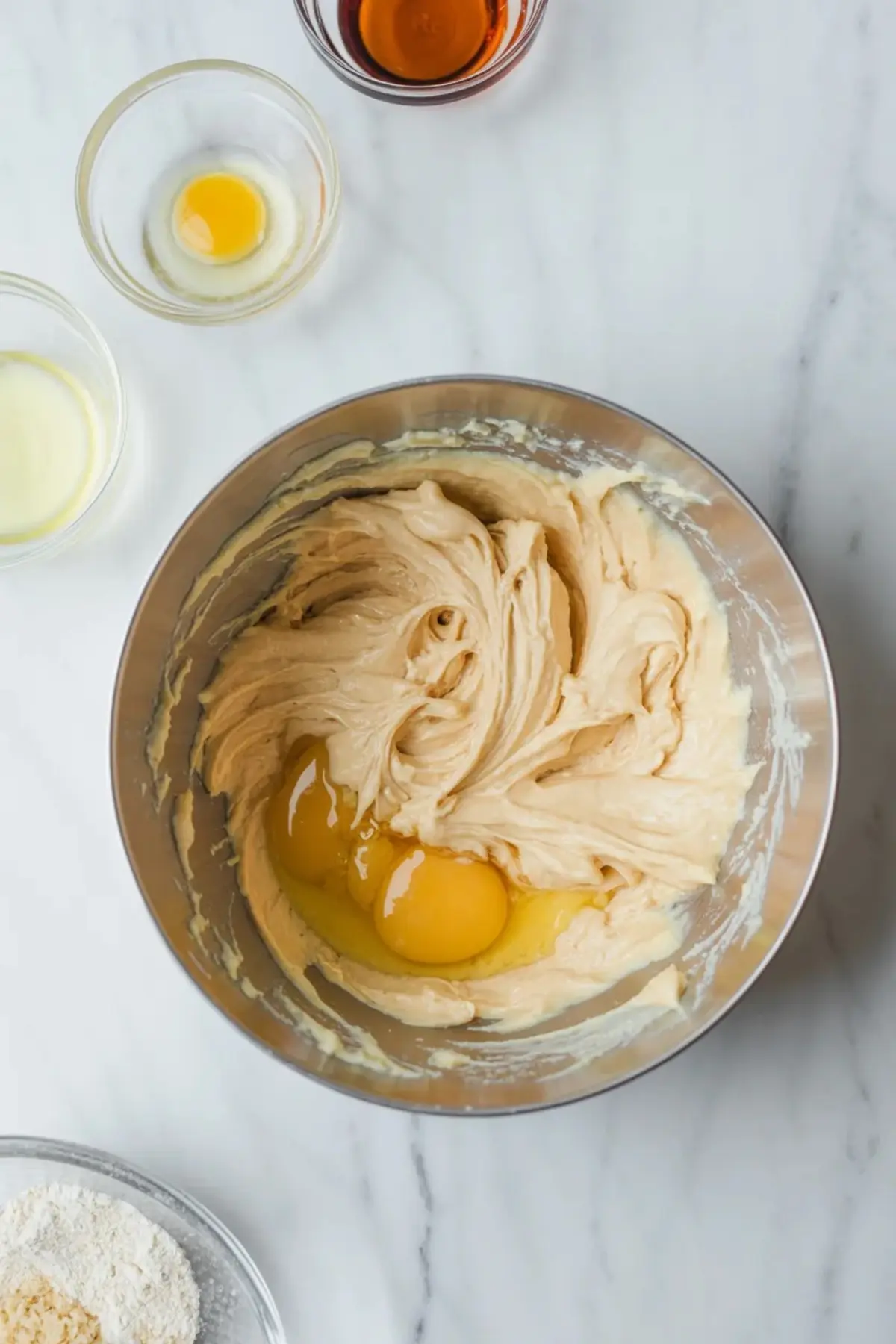
Then add the softened butter, the egg white, the almond extract and the vanilla. Mix until creamy and mostly smooth. A few tiny bits of almond paste are normal, and they bake into little chewy pockets.
Add the flour, powdered sugar, baking powder and salt and stir just until a soft, slightly sticky dough forms. If it looks truly wet, work in 1 more tablespoon of flour, and no more.
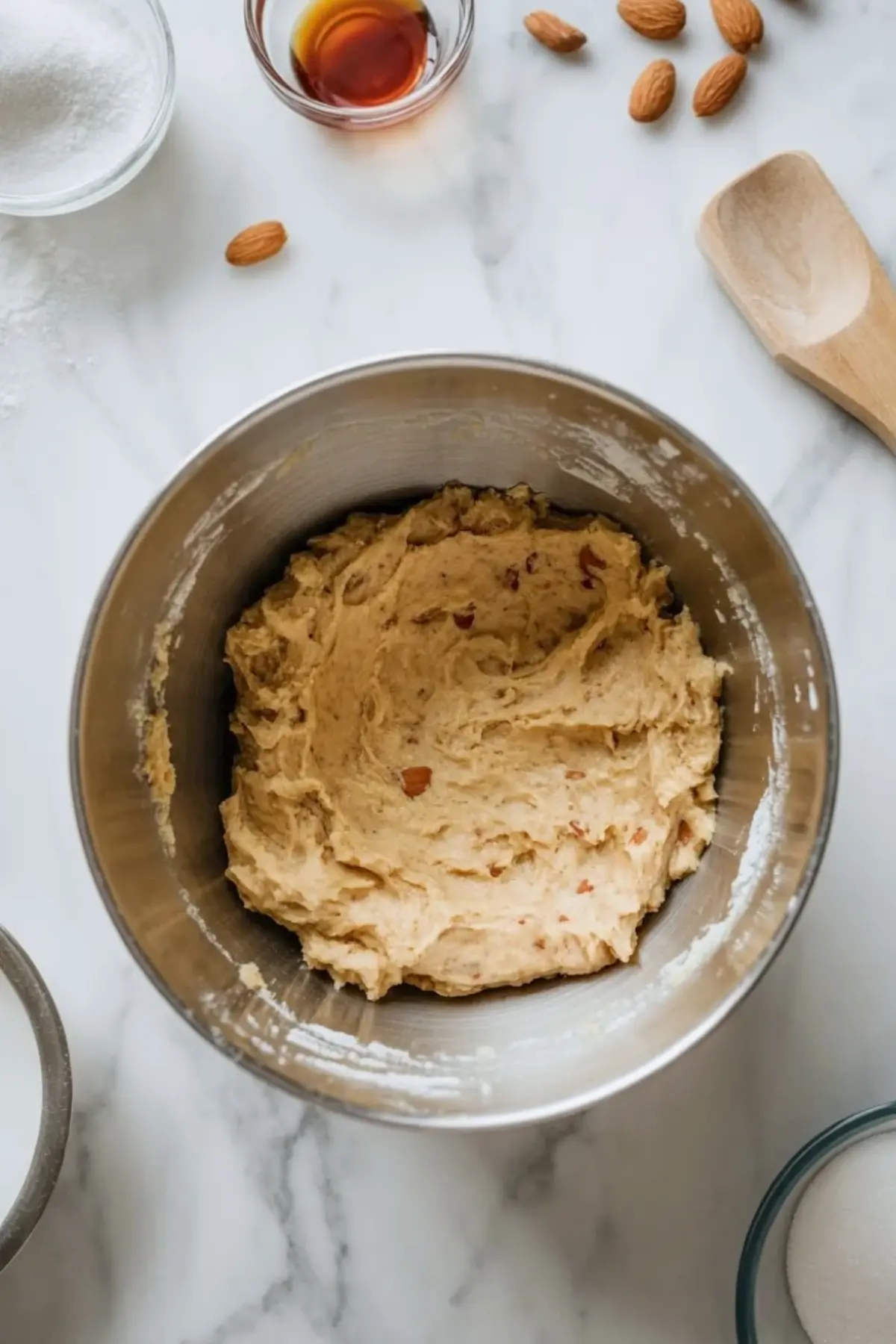
Chilling and Shaping the Almond Paste Dough
Cover the bowl and chill the dough for 20 minutes. Do not skip it. Cold dough is easier to roll, holds a rounder shape in the oven, and cracks across the top instead of spreading.
Divide the dough into 12 equal pieces. A kitchen scale helps, and even pieces bake at the same pace. Damp hands stop the dough from sticking while you roll each piece into a ball.
Set the balls 2 inches apart on the lined sheet and press the tops down gently with your fingers. Dust them well with powdered sugar, then press a few sliced almonds into the center of each one so they stay put during baking.
When to Pull Almond Paste Cookies From the Oven
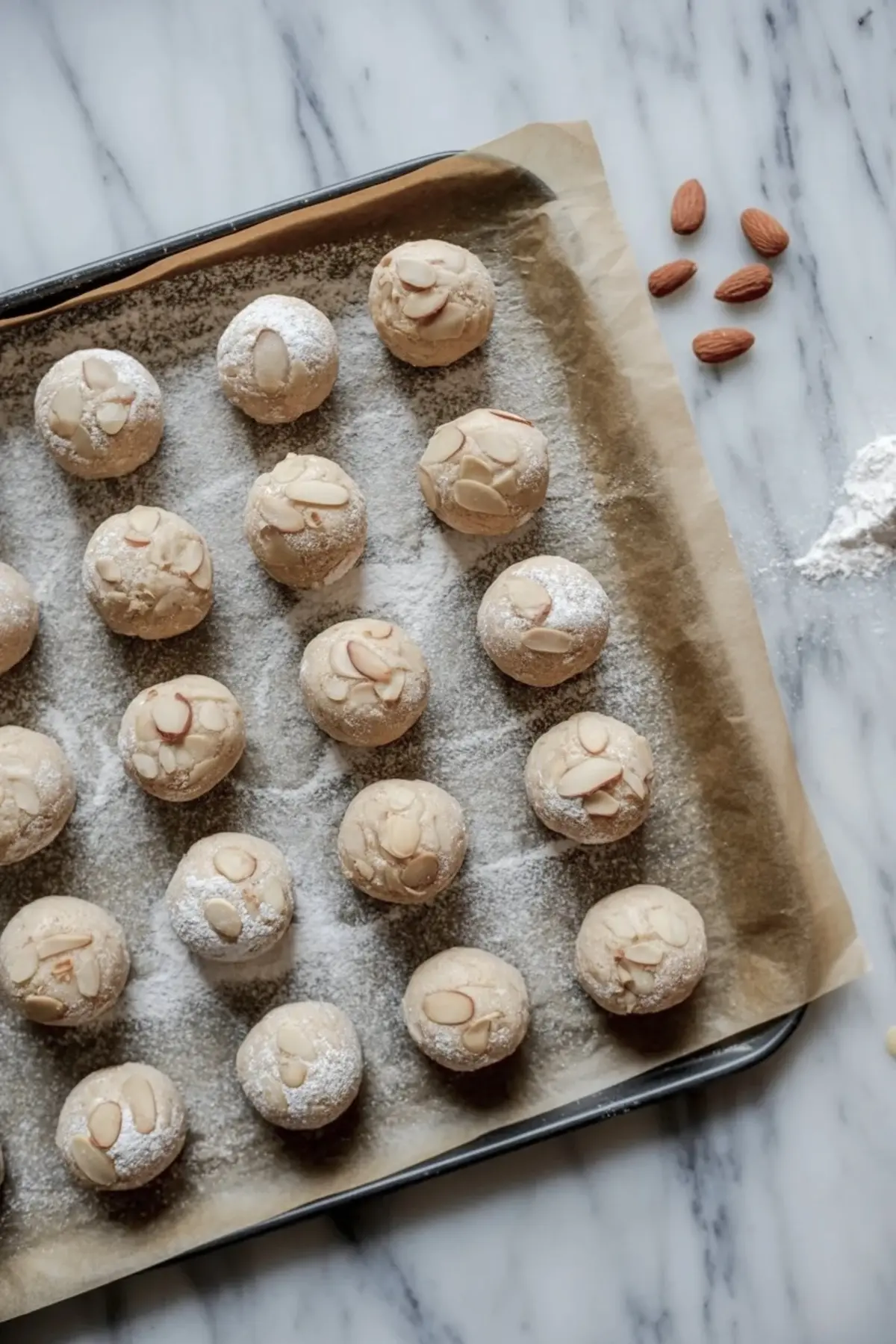
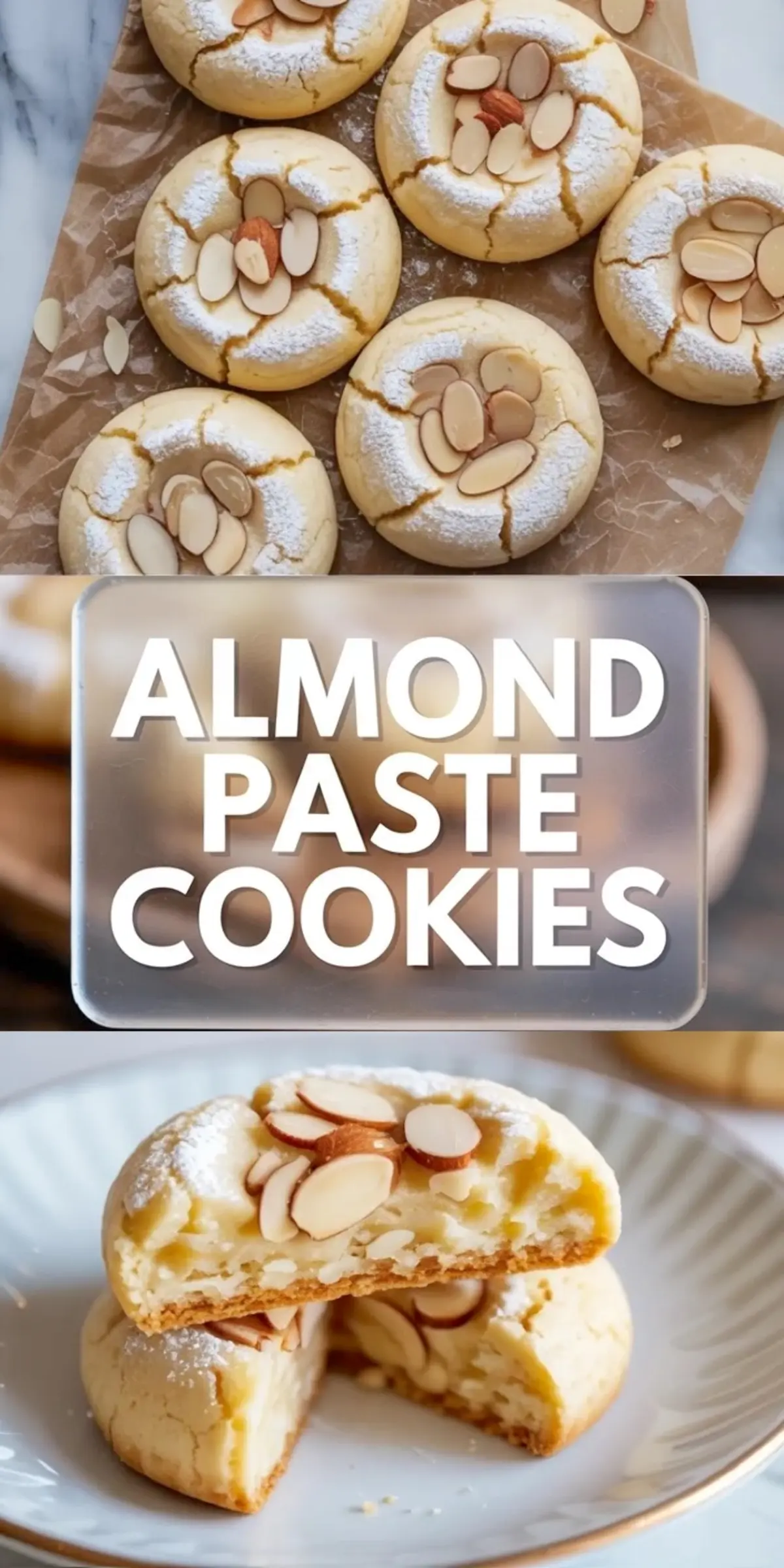
Bake for 14 to 16 minutes. Look at the edges, not the middle. When the rims turn lightly golden and the tops have cracked, the cookies are ready, even though the centers still look soft and slightly puffed.
Leave them on the baking sheet for 5 minutes. The bottoms firm up and the centers finish setting from the heat of the pan. Then move them to a wire rack to cool completely. A cooled cookie should bend a little before it breaks, with a moist, chewy inside.
If the Cookies Spread, Puff Up or Turn Hard
- Flat and spread out: the dough was warm or skipped the chill, the butter was melted instead of softened, or marzipan replaced the almond paste.
- Puffy and cakey: a whole egg went in instead of the white, or extra flour was added beyond the 1 tablespoon the recipe allows.
- Hard once cool: they stayed in until the centers looked firm. Take the next tray out at the first sign of golden edges.
- Lumpy dough: the paste was too stiff to break up. Grate or warm it next time and beat it with the sugar first.
- Almonds fell off: press them in after the powdered sugar dusting, firmly enough to sink in a little.
Storing, Freezing and Gifting Almond Paste Cookies
Keep the cookies in an airtight container at room temperature for up to 4 days. The almond paste keeps the centers moist, so they hold up well on a cookie tray or in a gift box. A fresh dusting of powdered sugar before serving brightens the tops again.
For longer storage, freeze the cooled cookies in a sealed container with parchment between layers for up to 3 months. Thaw them at room temperature in the container, then dust with sugar.
For a holiday box, pair them with raspberry filled almond snowball cookies, cranberry almond thumbprint cookies and cherry almond cookies. For a different texture next to them, black sesame cookies and cream cheese thumbprint cookies work well too.
Almond Paste Cookie Questions
Can I use almond extract instead of almond paste?
Not in this recipe. The paste gives the dough its body and chew, so extract alone would leave you with a different, drier cookie.
Are almond paste cookies gluten free?
This version is not, because it uses 1 cup of all-purpose flour. Many Italian almond cookies skip flour entirely, but this dough needs it for structure.
Where do I find almond paste?
Look in the baking aisle near the pie fillings and marzipan, usually in a small tube or can. Check the label says almond paste, not marzipan.
Can I make the dough ahead?
Yes. Keep the covered dough in the fridge for up to a day, then shape and bake. Let very firm dough sit out for 10 minutes so it rolls without cracking.
Have almond paste left over? Use it in a frangipane cream filling or bake a batch of almond croissant cookies.
Almond Paste Cookies
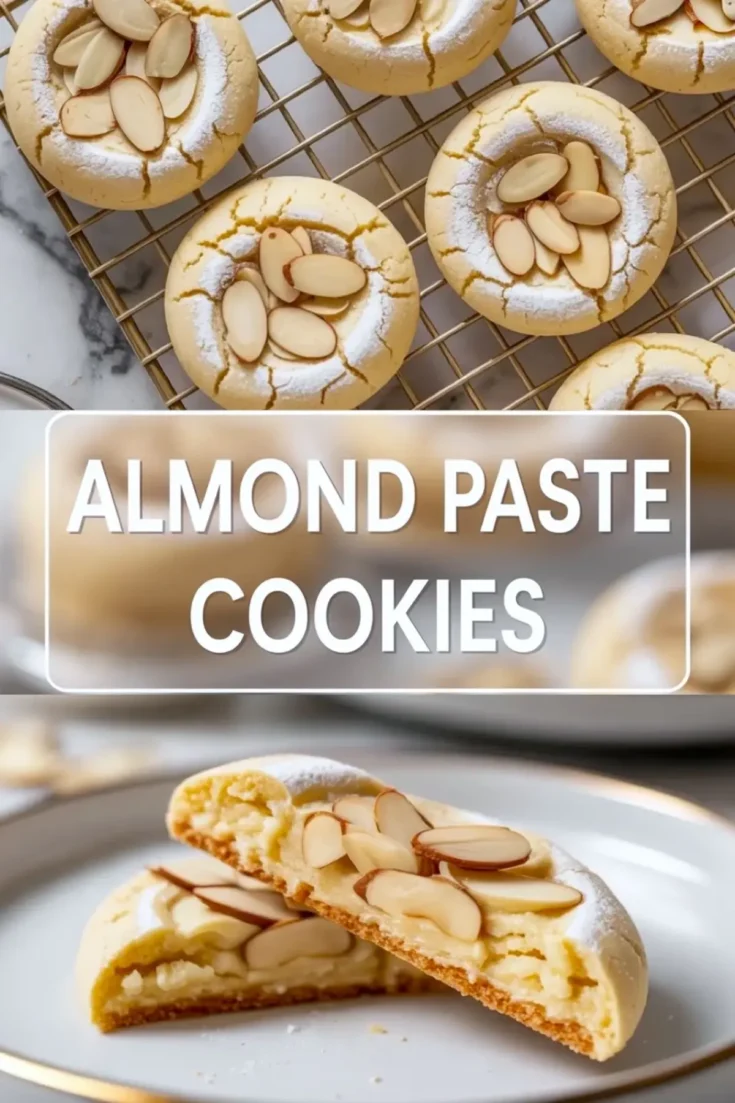
These almond paste cookies are chewy, crackle topped almond cookies made with crumbled almond paste, an egg white, a little butter, flour, and powdered sugar, finished with sliced almonds. The recipe makes 12 cookies in about 50 minutes, with a 20 minute chill and 14 to 16 minutes at 350°F, and the centers stay soft and dense like a bakery almond cookie. Beat the almond paste with the sugar first so it breaks into small crumbs, then pull the cookies when the edges turn lightly golden and the middles still look soft. Bake these cookies with almond paste for holiday cookie trays, gift boxes, or an afternoon coffee plate. Do not swap in marzipan, which spreads more. They keep 4 days airtight and freeze well.
Ingredients
- FOR THE COOKIES
- 1 cup almond paste, crumbled
- 1/2 cup granulated sugar
- 1/2 cup powdered sugar, plus more for dusting
- 1 large egg white
- 1 teaspoon almond extract
- 1/2 teaspoon vanilla extract
- 1 cup all-purpose flour
- 1/4 teaspoon salt
- 1/2 teaspoon baking powder
- 4 tablespoons unsalted butter, softened
- FOR THE TOPPING
- 1/4 cup sliced almonds
- Extra powdered sugar
Instructions
PREPARE THE OVEN: Preheat the oven to 350°F (175°C). Line a baking sheet with parchment paper to prevent sticking and help the cookies bake evenly.
MIX THE WET INGREDIENTS: Add the almond paste and granulated sugar to a large mixing bowl. Use a hand mixer or sturdy spoon to break the almond paste into small pieces. Add the softened butter, egg white, almond extract, and vanilla extract. Mix until the mixture becomes creamy and mostly smooth. Small bits of almond paste in the dough are normal and add texture.
ADD THE DRY INGREDIENTS: Add the flour, powdered sugar, baking powder, and salt to the bowl. Stir until a soft and slightly sticky dough forms. If the dough feels overly wet, mix in 1 additional tablespoon of flour.
CHILL THE DOUGH: Cover the bowl and refrigerate the dough for 20 minutes. Chilling helps the cookies hold their shape and creates the cracked tops during baking.
SHAPE THE COOKIES: Scoop the dough into evenly sized balls and arrange them on the prepared baking sheet, leaving about 2 inches between each cookie. Gently flatten the tops with your fingers. Dust the tops generously with powdered sugar and press sliced almonds into the center of each cookie.
BAKE THE COOKIES: Bake for 14–16 minutes or until the edges turn lightly golden. The centers should still appear soft when removed from the oven. Allow the cookies to rest on the baking sheet for 5 minutes before transferring them to a wire rack to cool completely.
Notes
Use almond paste, not marzipan; marzipan is sweeter and makes the cookies spread flat. If the almond paste is hard, grate it or warm it for about 10 seconds in the microwave, then beat it with the granulated sugar before adding the butter. Do not skip the 20 minute chill. For the best texture, avoid overbaking: take the cookies out when the edges are lightly golden and the centers still look soft, as they continue to set on the pan. Store in an airtight container for up to 4 days, or freeze baked cookies for up to 3 months. Dust with extra powdered sugar before serving for a fresh bakery finish.
Nutrition Information
Yield
12Serving Size
1Amount Per Serving Calories 318Total Fat 12gSaturated Fat 3gUnsaturated Fat 9gCholesterol 10mgSodium 78mgCarbohydrates 48gFiber 2gSugar 28gProtein 5g
